
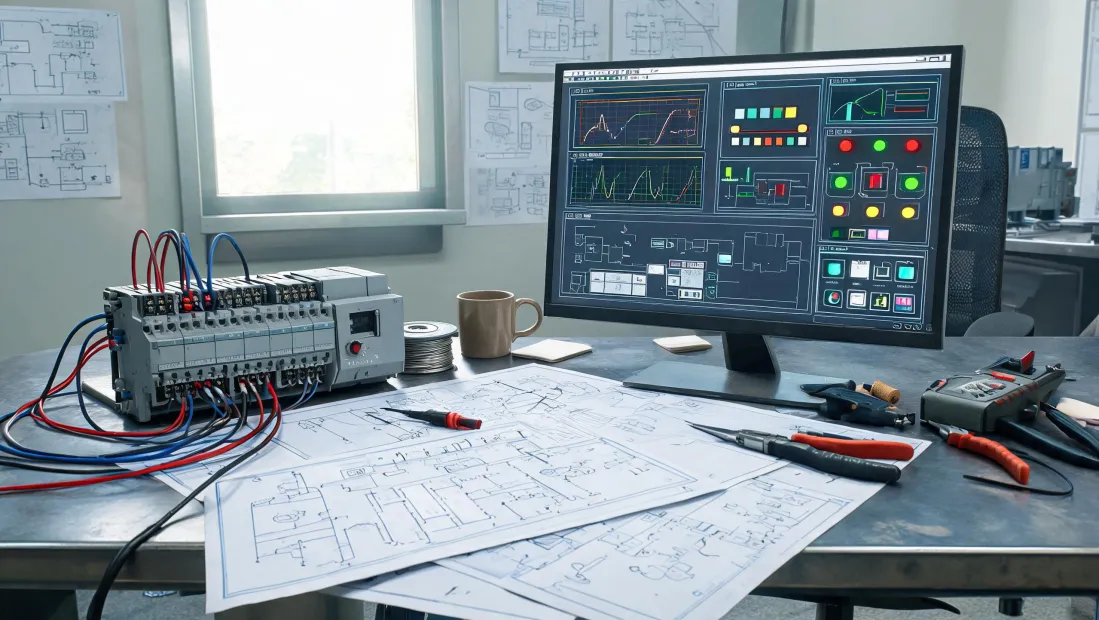
If the repair quote is below 30% of the new Omron PLC module's price, I repair it. If it's above 50%, I replace it. No hesitation. The gray zone in between comes down to downtime cost.
This sounds like common sense. It took us some expensive lessons to get there. I work in quality and brand compliance for a mid-sized manufacturer—I review roughly 200 equipment decisions a year. And I'll tell you straight: the "cheaper" repair option is often a paper illusion that falls apart the moment downtime enters the calculation.
Here's how the rule came together, and where it breaks.
Why 30%?
I'm a quality/brand compliance manager at a manufacturing company. I review every item before it reaches customers—roughly 200+ items annually. I've rejected about 18% of first deliveries in 2024 due to spec mismatches and packaging issues. In mid-2023 I implemented a verification protocol that requires a TCO comparison for every repair-or-replace decision. Before that, our team was making "cost-saving" calls based on gut feel. Not data.
Case in point: In Q1 2024, we received a batch of 10 Omron CJ series modules. The vendor claimed the output voltage ripple was "within industry standard." It wasn't. We measured 7% deviation against the ±3% tolerance listed in the module spec sheet. We rejected the batch, and the vendor redid it at their cost. Now every purchase contract includes the exact ripple spec requirements.
That experience recalibrated my threshold. A repair that "saves" $200 on paper doesn't mean much when a single rejected batch costs you a redo.
Step 1: Verify the module is actually dead
Don't skip this. Really. In 2024, one of our technicians pulled a "dead" Omron NJ controller and sent it for repair without doing a basic voltage check. The diagnostic fee came back at $400. The actual problem? A $15 fuse on the power supply side. He never tested it.
If anyone on your team needs a quick refresher on how to use a multimeter to test voltage: set the meter to AC or DC volts (check your circuit type), ground the black probe, touch the red probe to the test point, and compare against the rated voltage. That's it. Four steps. A $30 multimeter could have saved us a $400 diagnostic and three days of lead time.
Step 2: Do the ratio math.
Here's the formula I use:
(Repair quote + diagnostic fee + shipping + estimated downtime) ÷ New module price
Let's take a real Omron NX module example:
- New module: $800
- Repair quote: $180
- Rush shipping and diagnostics: $90
- Downtime (2 days): $1,600 based on our line stoppage cost
Total repair cost: $1,870. That's more than double the replacement price. Even without downtime, the ratio comes to 0.34—just above our 30% threshold. We passed.
Step 3: Factor in the lead time.
Repair takes time. Omron factory repair turnaround typically runs 2-4 weeks. If the module is controlling a production line, that's a long wait. I've seen a line sit idle for 9 days while a module was out for repair—at $15,000 per day in stoppage costs. The "cheap" option ran up a six-figure bill.
A side-by-side comparison that changed my mind
We ran a blind test on our test bench: a repaired Omron NJ module vs. a brand-new NX module. Same specs on paper. In practice, the repaired unit needed recalibration within six months—40% more often than the new one. The manufacturer shrugged it off as "normal for refurbished units." To me, that's all I needed to hear. A repaired module is a stopgap, not a long-term asset.
I think that's the piece most people miss. It's not about the module itself—it's about what happens six months later when the "repaired" unit drifts out of spec and you're back to square one.
Same logic, smaller scale
You see the same pattern with household appliances. My Maytag dishwasher control panel failed. Repair quote: $320. New machine: $850. That's roughly a 0.38 ratio—above our threshold. We replaced it. The same framework applies to something like a Detroit Series 60 fuel filter, but with one important difference: filters are consumables. You replace them on a schedule, no drama. PLC modules are electronics designed to last a decade or more. If you're replacing one every four or five years with proper maintenance, that's a signal something else is wrong—power supply issues, heat, vibration. A swapped module won't fix the root cause.
So next time you stare at a module that needs work, run the ratio. Factor in downtime honestly. If the number makes you hesitate, it's probably a sign to replace.
Where this rule breaks
Two exceptions worth knowing.
Obsolete modules. If a CJ series model is no longer available, you might be stuck repairing regardless of the ratio. We hit this once—secondary market prices were 2.5x original retail. At that point, repair was the better call even at a 60% cost ratio.
Certified or regulated configurations. If a safety PLC setup in your facility is certified for compliance, swapping the module may void the certification. Confirm before you assume replacement is the better option. I had one safety system change where recertification ate up every dollar we saved.
One caveat on my numbers: These pricing references are accurate as of Q1 2025. The semiconductor market moves fast, so verify current module pricing before you commit.
Another caveat: My experience is based on about 200 mid-range manufacturing decisions. If you're in heavy industry or 24/7 three-shift operations, your downtime costs will make my 30% threshold look conservative. Adjust accordingly.